
Why the Tape vs Pant style Diaper Debate Matters for Manufacturers and Brands
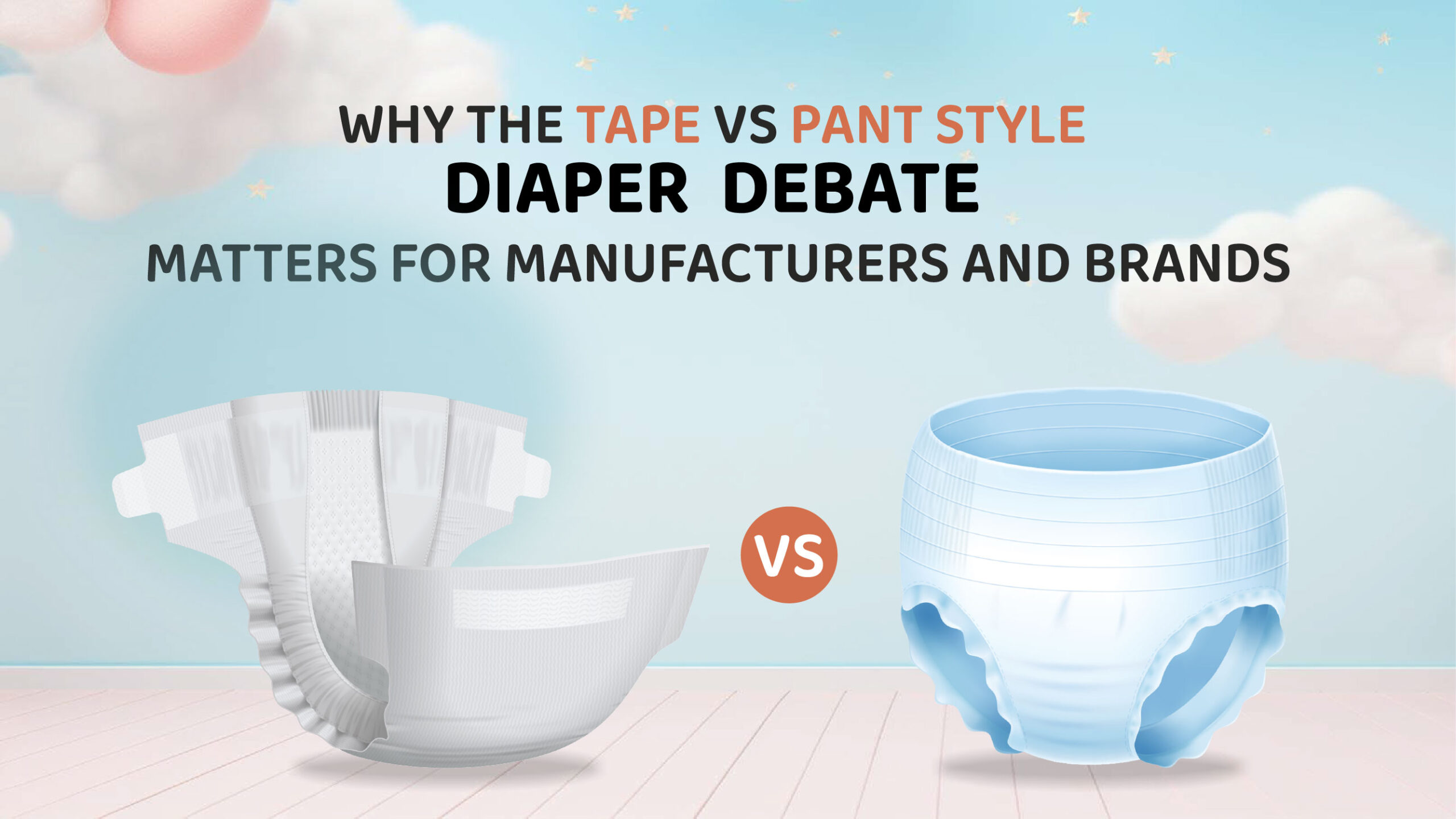
For any brand or manufacturer entering the diaper category, understanding the difference between tape style and pant style diapers manufacturing is essential. While a tape-style diaper uses adhesive or Velcro-style tabs to secure the diaper around the waist, a pant style diaper also called a pull-up; functions like a undergarment and is simply pulled on.
These design differences might appear small on the surface, but they lead to entirely different manufacturing flows, material requirements, cost structures, and market strategies.
Table of Contents
1. What Sets Tape-Style and Pant Style Diapers Apart?
Tape Style Diapers
Tape style diapers follow the traditional format: the user lies down, the diaper is wrapped around the waist, and fastened using side tapes or tabs. They are ideal for newborns, infants, and users who require assisted changes.
Parenting platforms frequently recommend tape style diapers for babies who mostly lie down and move less during changes.
Pant Style Diapers
Pant style diapers are designed like briefs with a 360° elastic waistband, making them ideal for standing, crawling, or walking babies. According to multiple baby-care sources, pant style diapers offer easier, faster changes for active infants.
In India, the pant style format has gained dominant market share, driven by convenience, hygiene, and modern retail trends.
2. Inside the Manufacturing Process
Although tape-style and pant style diapers share common raw materials and core components, their assembly and finishing steps diverge significantly.
Raw Materials & Core Formation
Regardless of diaper type, production starts with the essentials:
Fluff pulp – SAP (Super Absorbent Polymer) – Nonwoven top-sheet & backsheet – Elastic for waist/legs & Adhesives, tapes, or fasteners
Most Indian baby diaper manufacturers list the following as baseline materials.
The absorbent core — a blend of fluff pulp and SAP — is formed, wrapped, and laminated using high-speed air-laid and bonding systems. This stage is common across tape-style and pant-style manufacturing.
Where Manufacturing Paths Diverge: Assembly & Fastening
Tape-Style Diapers:
- Side-wing panel formation
- Adhesive/Velcro tape application
- Elastic leg cuff integration
- Waistband attachment
Tape diapers rely on precise tab applicators and ultrasonic bonding, making the fastening system one of the most important QC checkpoints.
Pant-Style Diapers:
- A 360° elastic waistband
- Pre-formed leg openings
- Side seams that are sealed or welded
- A shape that allows “pull-up” wearing
Pant-style diapers require more complex elastic feeding systems, stronger side seams, and additional welding processes – significantly increasing production complexity.
Quality Control & Packaging
For both formats, QC ensures:
- Absorbency performance
- Leak-guard accuracy
- Elastic rebound
- Side seam strength (especially for pant-style)
- Tape adhesion (for tape-style)
Packaging variations exist due to different fold patterns and product shapes.
3. Key Manufacturing Differences: Tape vs Pant Style Diapers
Structural & Functional Design
Tape style diapers offer adjustable fit and flexibility during changes.
Pant style diapers, built with elasticated waistbands, are chosen for independence and comfort.
Fit, elasticity, and seam strength differ between the two, influencing both the user experience and manufacturing requirements (Safilo Care).
Machinery & Production Line Requirements
Pant style production lines need:
- Elastic waistband lamination units
- Tube forming modules
- Side seam welders
- Complex sealing systems
Tape style lines typically include:
- Tape applicators
- Simple side-seal systems
- Lower-elastic tooling
Indian manufacturers note that the “fastener application vs side seam sealing” requirement is a major differentiator (No.1 Nonwoven Fabric Manufacturer).
Labour, Waste & Yield Differences
Pant style manufacturing can lead to:
- Higher raw material waste (especially elastics)
- More rejects during QC due to seam complexity
- Higher skill requirements for technicians
Tape-style manufacturing tends to provide better yield efficiency due to a simpler structure.
4. Cost Implications: Tape Style vs Pant Style Diaper Production
Capital Investment for Tape Style Lines
Tape style machines require fewer modules, simpler cutting and sealing, and lower maintenance.
This leads to lower Capital Expenditure compared to pant style lines.
Capital Investment for Pant Style Lines
Pant style lines need:
- Elastic lamination units
- Side seam welding technology
- Advanced forming systems
- More automated packaging line adjustments
These costs are higher, but pant-style diapers often deliver stronger brand positioning and higher sales volume.
Variable Costs & Overheads
Pant style diapers generally incur:
- Higher raw-material cost (elastic, nonwoven layers)
- More labour oversight
- Slightly higher electricity consumption
- More complex QC requirements
Despite higher manufacturing cost, India’s price-sensitive retail market often prices tape and pant diapers similarly – compressing margins unless production scale is optimized
5. Market Response in India: What Consumers Prefer
Market Share & Category Growth
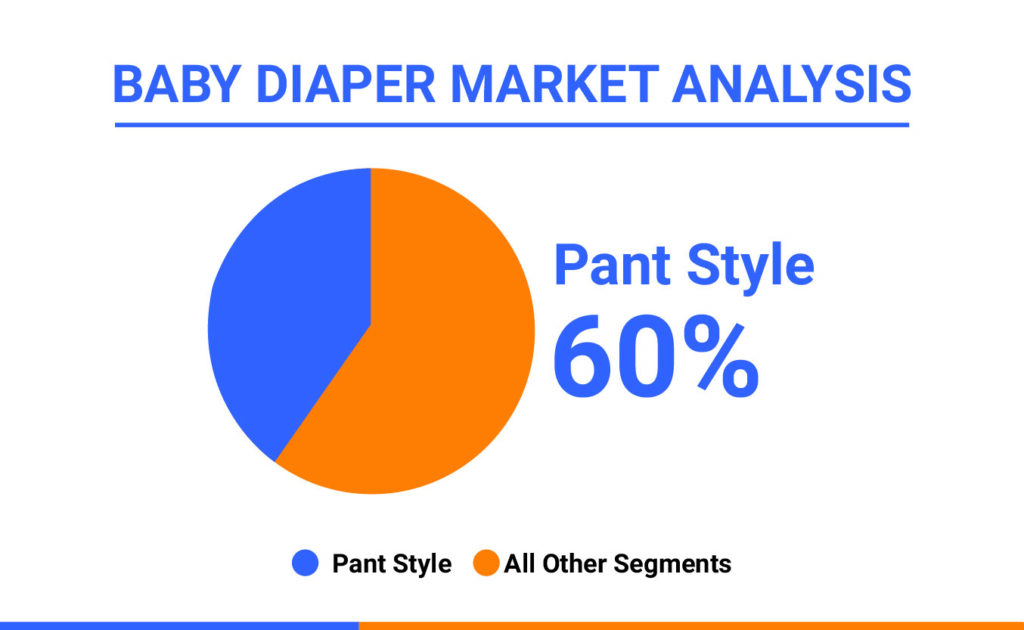
India’s diaper market is expanding rapidly and is expected to keep growing. Pant style diapers dominate with nearly larger market share, while tape style accounts for less, a stark contrast to many global markets. Pant style diapers are expected to dominate the global baby diaper market by type, accounting for approximately 60% of total market share in 2025. Find detailed report by fmi
Consumer Preferences
Parents generally start with a tape style for newborns, then switch to pants style once babies begin moving. Parenting blogs consistently highlight pant style diapers as more convenient for crawling and walking babies.
OEM Outlook: Pant Style vs Tape Style
OEM manufacturers in India report significantly higher demand for pant style diapers lines because brands want to match dominant retail preferences.
However, tape style remains a critical SKU for newborns and hospitals. OEMs offering both formats serve the full product lifecycle efficiently.
6. OEM & Outsourcing Perspective in India
Role of OEM Manufacturers
India has become a major hub for both tape style and pant style diapers manufacturing, supplying domestic brands and export markets. The right OEM partner offers:
- High-volume capacity
- Strict QC systems
- Competitive costing
- Flexible size & product customization
Challenges OEMs Face
- Tooling and size changeover costs
- Tight margins due to similar retail pricing
- Market pressure for high-speed, low-waste lines
- Regulatory compliance and QC standards
- Intensifying competition among Indian OEMs
OEMs capable of producing both styles gain a strategic advantage in India’s fast-growing market.
7. Strategic Takeaways for Manufacturers & Brands
Align Production with the Right Market Segment
- Tape style: Newborns, early infant stage, adult incontinence
- Pant style: Crawlers, toddlers, urban families
Given India’s consumer shift, pant style delivers higher volume, but tape-style remains essential for a complete product portfolio.
Weigh Cost vs Value
Pant style diapers cost more to manufacture but capture a larger market share and offer better brand positioning. Tape style provides cost efficiency and stable demand in niche segments.
What the Future Holds
India’s diaper sector is growing steadily. Pant style diapers manufacturing seem to dominate the toddler and day-use category, while tape style diapers will remain critical for newborn and adult care. Brands that invest in both formats, maintain cost control, and monitor consumer behaviour will be best positioned for success.
Conclusion
Understanding the tape style and pant style diapers manufacturing landscape is crucial for brands, manufacturers, and OEM partners in India. With clear differences in design, machinery, cost structures, and market response, both formats serve distinct roles in the hygiene ecosystem. Tape-style remains indispensable for newborn and adult care, while pant style diapers lead consumer preference and define the future of the category.
For manufacturers, the winning strategy lies in cost efficiency, flexible production, and the ability to offer both diaper formats to meet India’s rapidly evolving demand.


