
Emerging markets are entering one of the most transformative phases the global hygiene industry has ever witnessed. Across Asia, Africa, the Middle East, and Latin America, rising income levels, shifting lifestyles, and expanding modern retail are creating unprecedented demand for disposable hygiene products – from baby diapers and sanitary pads to adult incontinence solutions and wet wipes.
According to multiple market analysts, the hygiene products industry forecast for emerging markets shows acceleration that will not only outpace developed regions but also reshape the global supply chain by 2030. These markets are no longer peripheral—they are becoming the new centers of growth, innovation, and large-scale manufacturing.
Table of Contents
What is striking is that this momentum isn’t fuelled by a single trend. Instead, a powerful combination of demographic expansion, economic mobility, healthcare awareness, and manufacturing upgrades is pushing hygiene consumption into a new era of scale and sophistication.
Why Hygiene Products Are Becoming Essential in Emerging Economies
One of the strongest catalysts of this industry shift is the rapid rise of the middle class in countries such as India, Indonesia, Vietnam, Nigeria, Kenya, and Bangladesh. As household incomes grow, families increasingly move away from traditional cloth-based hygiene methods toward branded disposable products—especially in baby care and feminine hygiene.
Urbanization plays a central role as well. The expansion of supermarkets, pharmacies, and e-commerce platforms has made hygiene products more visible and accessible. For millions of first-time buyers, disposable diapers or sanitary pads symbolize not just convenience but an enhanced standard of living.
Experts point out that hygiene consumption is directly linked to economic progress. When disposable incomes increase, families prioritize products that improve health, comfort, and personal dignity. Health awareness campaigns have further accelerated this shift, particularly in the adoption of sanitary pads and adult incontinence items.
Diaper Manufacturing Trends Reshaping Emerging Markets
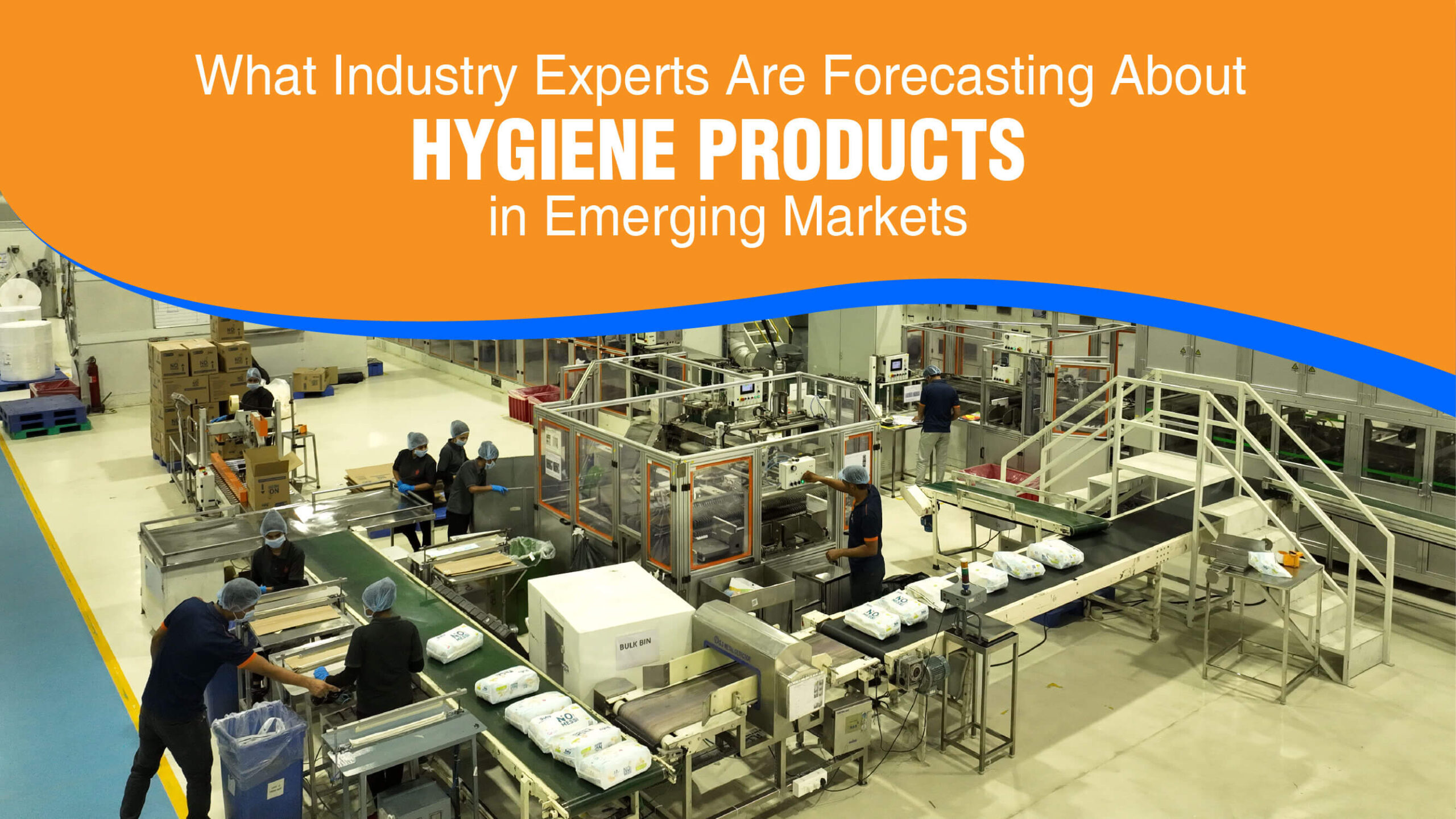
Among all hygiene categories, diapers are experiencing some of the sharpest growth curves. Market analysts highlight clear diaper manufacturing trends in emerging markets, where OEM manufacturers are upgrading production lines to meet rising expectations of quality, comfort, and affordability.
Pant-style diapers have become the standout trend. Viewed as more comfortable and easier to change—especially for active toddlers—pant-style diapers have become the preferred format in many urban regions. This mirrors global consumer behaviour, where pull-up designs occupy the premium tier.
However, tape-style diapers continue to play a crucial role, especially for newborns and for rural markets where affordability and adjustability matter most. This dual-format demand is prompting manufacturers in India, Turkey, Indonesia, and Vietnam to invest in dual-format high-speed machines capable of producing both pant and tape diapers at scale.
As more global brands and private labels source from Asia-Pacific factories, emerging markets are also becoming major export centers for diaper production.
The Expanding Global Market for Adult Incontinence Products
A significant part of the adult diaper market forecast globally is driven by aging populations—not only in Japan, Europe, and North America, but increasingly across Asia and the Middle East as life expectancy rises.
Healthcare providers and caregivers are recognizing adult incontinence as a legitimate medical concern rather than a stigma, leading to greater adoption in hospitals, senior-care facilities, and retail channels. Pant-style adult diapers are gaining popularity due to comfort and discretion, while tape-style diapers remain preferred in medical settings where assisted changes are common.
Analysts project double-digit growth for adult incontinence products through 2030, making this category one of the fastest-expanding segments in the hygiene industry.
Southeast Asia: Young Populations, Fast Growth, Digital Demand
Southeast Asia remains one of the most exciting hygiene markets globally. Countries like Vietnam, Indonesia, Malaysia, and the Philippines boast young demographics, growing birth rates, and booming e-commerce ecosystems.
This region has rapidly adopted subscription-based purchasing, particularly for diapers, wipes, and sanitary pads. As online retail accelerates, analysts expect the hygiene product demand forecast in Southeast Asia to remain consistently strong, driven by convenience, delivery reliability, and the increasing trust consumers place in private-label and imported brands.
Asia-Pacific: The Global OEM Powerhouse for Hygiene Products
Asia-Pacific has become the backbone of the global hygiene manufacturing industry. From India and China to Turkey, Indonesia, and Vietnam, the hygiene products OEM trends in APAC show large contract manufacturers producing diapers, pads, pant diapers, adult care products, and wet wipes for brands around the world.
What sets APAC apart is its combination of:
- Cost efficiency
- Advanced converting technology
- Skilled labor
- Ability to scale rapidly
- Flexibility to produce private-label SKUs for retailers globally
Retail chains and global distributors now rely heavily on APAC factories not only for high-volume manufacturing but also for innovation in raw materials, sustainability, packaging, and design.
What Experts Predict for hygiene products industry growth in 2025–2030
Looking ahead, experts expect emerging markets hygiene product growth in 2025–2030 to accelerate across baby care, feminine hygiene, and adult incontinence. Improving affordability, better awareness, and modern supply chains will push penetration levels higher—especially in India, Africa, and Southeast Asia.
On the export front, strong hygiene products export opportunities continue to emerge in the Middle East, North Africa, Latin America, and Eastern Europe, where local manufacturing capacity remains limited. Meanwhile, the expert outlook for hygiene manufacturing in the U.S. and Europe highlights a rising focus on sustainability, premium materials, biodegradable solutions, and AI-powered automation. Yet, even with these technological advancements, Western markets will continue relying on Asia-Pacific OEMs to meet cost and scale requirements.
Together, these developments position emerging markets not just as major consumers of hygiene products—but as the future manufacturing hubs that will shape global supply chains for decades to come.


