
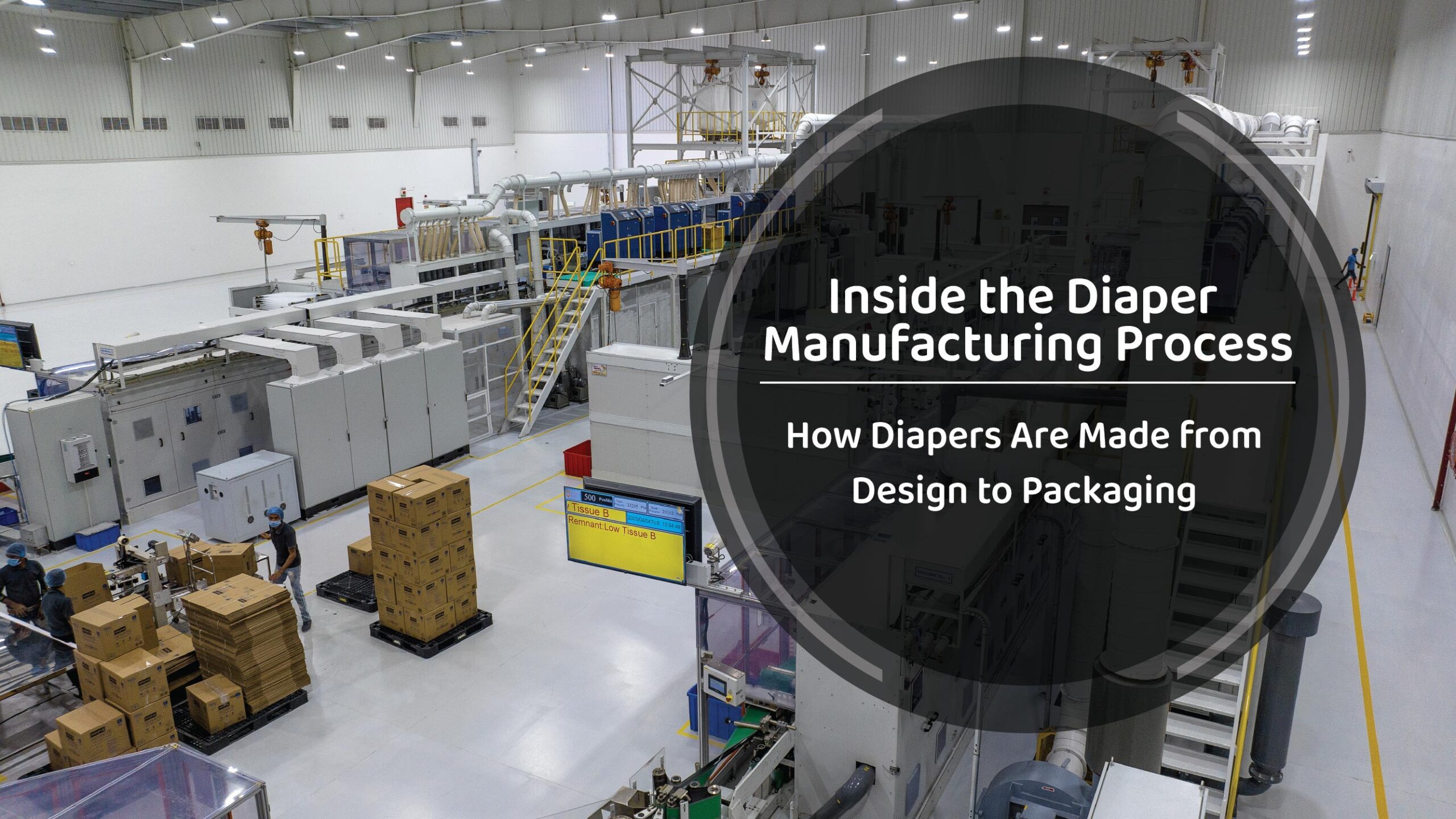
The diaper manufacturing process is a remarkable fusion of engineering precision, hygiene science, and automation. What was once a simple cloth wrap has evolved into a sophisticated hygiene product designed for maximum comfort and absorbency. Understanding how diapers are made offers a deeper appreciation for the technology that keeps babies comfortable and dry. From selecting premium diaper raw materials to advanced packaging systems, every stage of the baby diaper production process is engineered for efficiency, safety, and consistency.
Table of Contents
Diaper Making Process Step By Step
The diaper making process step by step follows a tightly controlled series of operations — each ensuring absorbency, comfort, and quality. Although a disposable diaper might seem like one of the simplest products on a supermarket shelf, in truth, it is the result of decades of material science, precision engineering, and rigorous testing. Modern diapers are built layer by layer in high-speed facilities capable of producing over 800 units per minute, combining chemistry, mechanics, and data analytics into a single continuous operation.
Behind every pack on a shelf lies a complex manufacturing journey involving precision design, advanced materials, and quality systems fine-tuned to microns.
1. The Design Stage: Where Every Diaper Begins
It all begins in the design lab — not on the factory floor. Before a single fiber is produced, engineers and product designers model the ideal shape, structure, and fit using advanced computer-aided design (CAD) systems.
Each contour, fold, and absorbent channel is intentional. The aim is to maximize absorbency while maintaining breathability and comfort. The balance is delicate: strong enough to protect, yet soft enough for a baby’s sensitive skin. This design work forms the backbone of the entire diaper manufacturing process, ensuring performance at scale.
2. Understanding Diaper Raw Materials: The Science Beneath the Layers
The materials that make up this design are equally crucial. Modern diaper raw materials are the result of decades of innovation in material science.
- Top Sheet (Skin Contact Layer):
A soft nonwoven fabric, usually polypropylene or polyethylene, that ensures a gentle touch. - Absorbent Core:
A blend of natural fluff pulp and super absorbent polymer (SAP). These SAP crystals can hold up to 30 times their weight in liquid, locking it away from the skin. - Back Sheet (Outer Layer):
A waterproof yet breathable polyethylene film that prevents leaks without trapping heat. - Elastic Components:
Leg cuffs and waistbands made from elastic fibers to ensure flexibility and a snug fit. - Adhesives:
Thin adhesive layers that bind the structure without adding stiffness or bulk.
Every material contributes to absorbency, comfort, and durability — essential outcomes of a modern baby diaper production process.
3. The High-Speed Diaper Making Process
Inside a manufacturing plant, the diaper making process step by step unfolds as a symphony of precision and speed. Massive bales of fluff pulp are shredded into fine fibers, then mixed with SAP granules to form the absorbent core. This airy, soft layer becomes the heart of the diaper.
On a fast-moving conveyor line, automated systems layer the nonwoven top sheet and back sheet around this core, bonding everything with heat and glue patterns so fine they are nearly invisible. Every step is synchronized:
- adhesives applied within milliseconds
- elastic fibers stretched and sealed precisely
- cutting units slicing each diaper with perfect symmetry
The entire sequence runs at breathtaking speed — hundreds of diapers per minute — yet every unit emerges identical to the next.
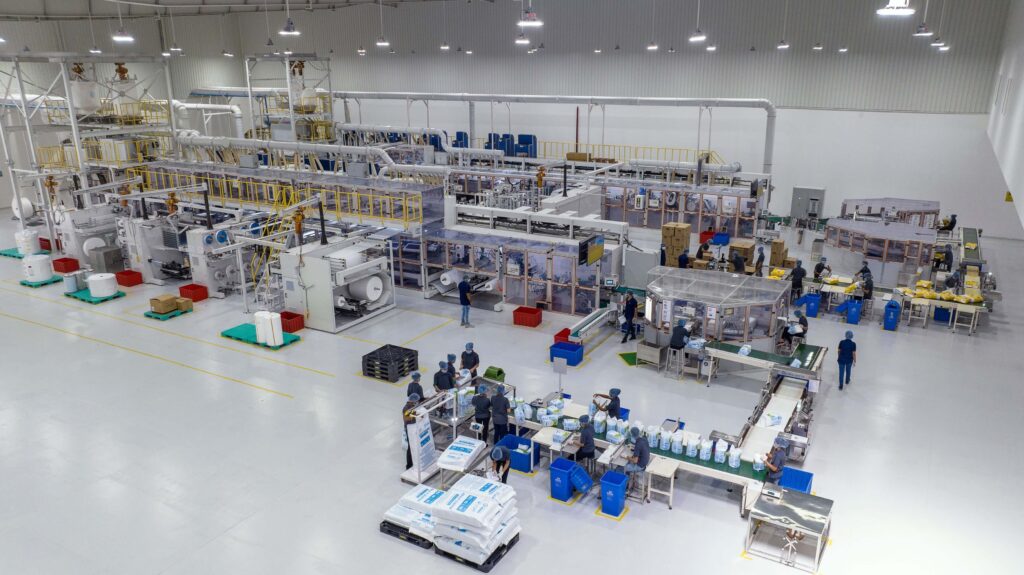
If you stood next to a production line in India today, you’d see sensors blinking, robotic arms folding and stacking, and operators monitoring digital dashboards. Modern diaper production line India facilities now match global standards, using smart sensors to detect issues such as misaligned cuffs or uneven glue application. The result is industrial choreography refined through automation and data intelligence.
4. Diaper Quality Testing Process: Where Performance Meets Safety
This level of precision would mean little without rigorous testing. That’s where the diaper quality testing process takes over. Each production batch undergoes detailed laboratory evaluations:
- Absorbency Tests: Measure how much liquid the diaper can hold before saturation.
- Rewet Tests: Ensure moisture does not return to the surface.
- Tensile Strength Tests: Assess seam and elastic durability under stress.
- Motion Simulation: Some factories use robotic legs to mimic real baby movements.
Additionally, dermatological assessments ensure the diaper is gentle on skin and free from allergens. Only after passing these tests do diapers move on to the packaging floor.
5. Packaging the Finished Diapers: Precision and Protection
Once approved, the diapers are transported to automated or manual packaging units. Here, workers or robotic stackers arrange them into neat bundles before sealing them in protective plastic.
Barcodes and batch codes are applied for full traceability — enabling a single pack to be traced back to its production minute.
Sustainability is increasingly influencing this stage as well. Manufacturers are shifting toward biodegradable or recycled packaging materials. Some Indian plants now experiment with compostable wraps and water-based inks, reducing environmental impact without compromising product integrity.
6. The Evolution of the Diaper Manufacturing Process in India
Across India, the industry is evolving rapidly. Local diaper machine manufacturers in India are developing modular systems that accommodate multiple sizes — from baby diapers to adult incontinence pads — without pausing production.
The country’s growing middle class and rising birth rate have fueled investment in precision equipment, automation, and workforce training. What was once a low-tech assembly operation has transformed into a high-precision, environmentally conscious sector employing thousands.
7. The Future: Sustainability, Smart Diapers & Advanced Materials
The future of the diaper manufacturing process is being shaped by sustainability and digital innovation. New design prototypes include:
- biodegradable topsheets made from bamboo
- plant-based absorbents replacing synthetic SAP
- smart diapers with moisture sensors connected to mobile apps
- waste recycling systems turning offcuts into usable pulp
What once seemed futuristic is now under development in labs across Asia and Europe, showcasing how quickly the industry is advancing.
A Quiet Promise Behind Every Diaper
It’s easy to overlook what goes into something so ordinary. Yet when you peel back the layers — literally and figuratively — you discover a convergence of science, engineering, and sensitivity.
A diaper’s quiet promise is simple: dryness, comfort, and safety. But behind that promise lies one of modern manufacturing’s most refined examples of innovation at scale.
The next time you open a pack, remember that each diaper began as an idea on a screen, travelled through miles of machinery, and passed countless tests — all to make your little one’s world a little softer and a lot drier.
If you are a business owner, distributor, or brand looking to source high-quality diapers or explore private label manufacturing, Swara Baby can help.
Our team specializes in diaper OEM and contract manufacturing with premium materials, advanced machinery, and strict quality systems. 👉 Contact us today to discuss your requirements and get expert assistance for your diaper business


