

The baby diaper industry is evolving at a remarkable pace. What was once a simple hygiene product has now become a highly engineered solution focused on comfort, performance, and sustainability. Today’s parents expect more than basic leak protection. They look for diapers that keep babies dry for longer, protect sensitive skin, and are developed with environmentally responsible materials.
Table of Contents
As expectations rise, manufacturers are investing heavily in R&D in hygiene products and product development. From advanced absorbent materials to digitally enabled monitoring systems, diaper technology is moving into a new era. These developments are shaping the future innovations in baby diaper design while reflecting broader global diaper market trends that prioritize safety, convenience, and sustainability.
Understanding these developments offers valuable insight into where infant care products are headed and how manufacturers are redefining performance standards through diaper material innovation and engineering.
1. Rethinking the Diaper Core: Microfluidics and Capillary Design
At the center of diaper performance lies the absorbent core. Traditionally, this core relied heavily on fluff pulp combined with superabsorbent polymers (SAPs). While fluff pulp still plays an important role, modern diaper core engineering increasingly relies on highly optimized SAP structures that can absorb many times their own weight in liquid.
A major advancement in this area is the introduction of channel core design. In this structure, carefully placed longitudinal channels run through the absorbent core. These channels act as pathways that guide fluid quickly away from the surface and distribute it evenly across the diaper.
The process works through capillary action. Instead of liquid accumulating in one spot, it spreads across the core where absorption capacity is maximized. This helps prevent a phenomenon known as gel blocking, where swollen polymers slow down additional absorption.
Through custom absorbency design, manufacturers can control fluid distribution and retention more effectively. The result is better moisture management, improved airflow, and enhanced skin microclimate control, which helps maintain comfort and reduce the risk of diaper rash.
These innovations are becoming central to the future innovations in baby diaper performance and design.
2. Moving Toward Sustainable Materials
Environmental impact has become a major conversation in the hygiene industry. Disposable diapers, while essential for convenience and hygiene, contribute significantly to landfill waste. This has accelerated the search for more sustainable materials.
One of the most significant emerging trends in diaper materials is the shift toward renewable fibers and bio-based components. Manufacturers are now exploring biodegradable diaper materials such as bamboo pulp, organic cotton, and plant-derived polymers as alternatives to conventional petroleum-based ingredients.
These developments represent a major wave of eco-friendly diaper innovation, aimed at creating products that balance high absorbency with environmental responsibility. Researchers are also experimenting with thinner cores and lighter materials to create a sustainable absorbent core that reduces material usage without compromising performance.
Innovation is also taking place at the recycling stage. Some companies have developed processes that allow used diapers to be separated into reusable components such as pulp and plastic. These systems reduce water consumption compared with traditional recycling methods and demonstrate how emerging diaper manufacturing trends are addressing sustainability challenges.
While fully biodegradable diapers remain complex to manufacture at scale, these developments reflect some of the most important emerging trends in baby diaper technology.
3. Smart Diapers and Digital Monitoring
Another area gaining attention is the concept of smart diapers. Through smart diaper technology, diapers can incorporate sensors capable of detecting moisture levels and notifying caregivers when a change is needed.
Several prototypes use passive RFID sensors or lightweight Bluetooth modules to detect wetness. Some experimental designs even integrate absorbent hydrogel material as part of the antenna structure, helping keep sensors thin and cost-effective.
When paired with mobile applications, these systems could provide real-time insights into diaper usage patterns and baby care routines. This concept is closely aligned with the development of AI-enabled baby care products, where digital monitoring tools support better infant health management.
Such systems represent the next stage of next-generation diaper design, combining hygiene products with connected healthcare technologies.
For hospitals, neonatal care units, and assisted-care environments, these monitoring solutions may significantly improve caregiver efficiency while maintaining patient comfort.
4. Manufacturing Scale and Industry Dynamics
Introducing advanced diaper technology requires more than material innovation. It also demands sophisticated manufacturing capabilities. Modern diaper production relies on high-speed diaper production lines that can produce up to a thousand diapers per minute. At this scale, even small inconsistencies can affect product performance. As a result, companies implement strict quality control in diaper manufacturing to maintain reliability and product consistency.
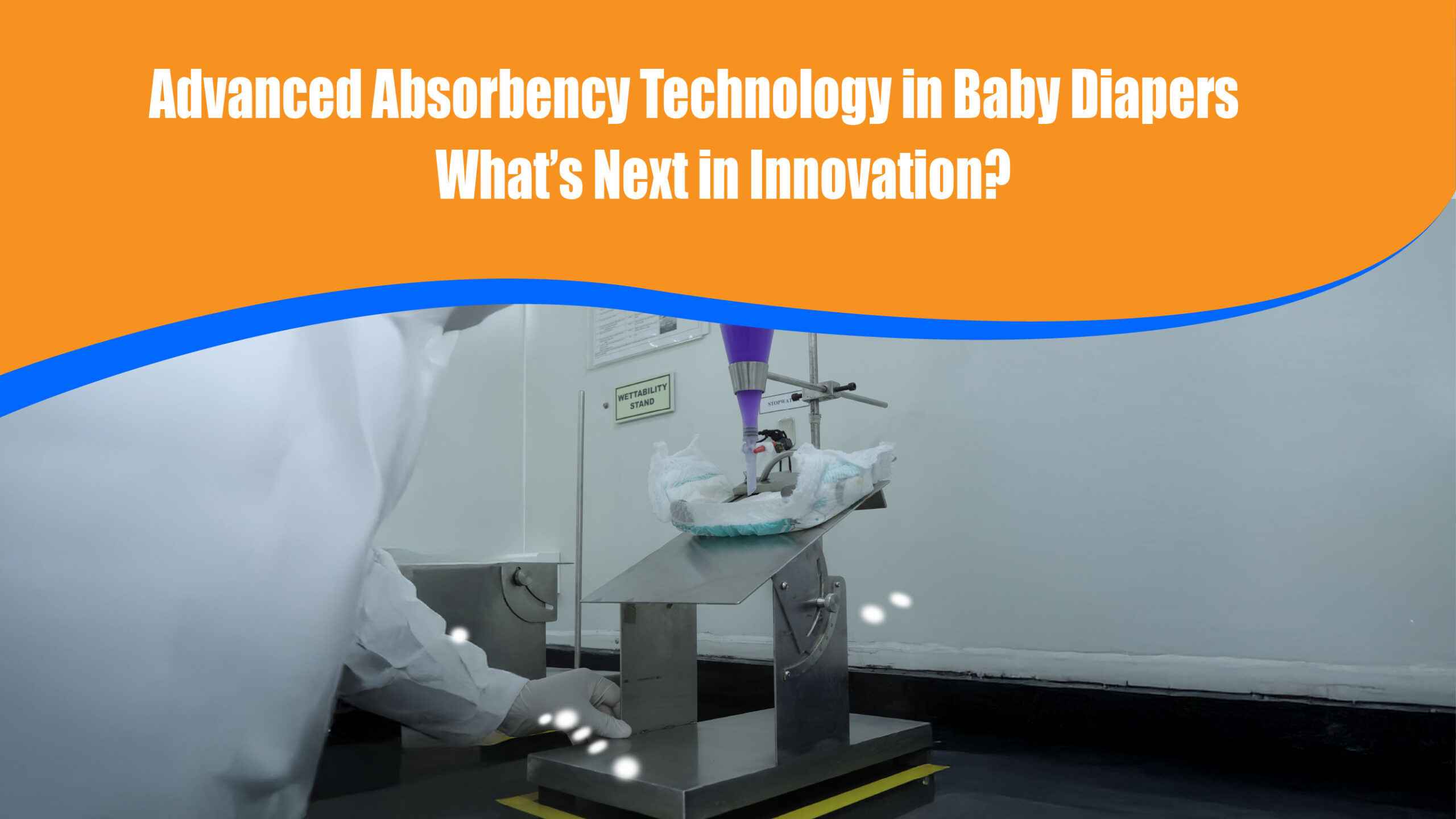
Several laboratory metrics are used to evaluate performance through established absorbency testing standards:
- Free Swelling Capacity (FSC): Measures the maximum amount of liquid a superabsorbent polymer can absorb when it expands freely without external pressure.
- Centrifuge Retention Capacity (CRC): Measures how much liquid the polymer retains after centrifugal force is applied.
- Absorption Under Load (AUL): Measures how much liquid the polymer can absorb while pressure is applied, simulating real-life conditions.
- These testing protocols ensure diapers maintain performance during movement, pressure, and repeated fluid exposure.
At the same time, retailers increasingly collaborate with manufacturers through private label diaper technology and OEM diaper innovation partnerships. These collaborations allow brands to launch high-quality diapers under their own labels while benefiting from specialized production capabilities.
However, manufacturers must also navigate ongoing supply chain challenges in diaper industry operations. Key raw materials such as SAP depend heavily on petrochemical markets, meaning fluctuations in crude oil prices can directly affect production costs.
These dynamics illustrate both the challenges and opportunities for diaper manufacturers operating in an increasingly competitive environment.
Looking Ahead: Balancing Innovation and Accessibility
The next phase of diaper innovation will likely involve a combination of material science, sustainability, and digital technology. Smart monitoring systems, advanced absorbent materials, and environmentally responsible components will continue to shape the future innovations in baby diaper technology.
At the same time, the industry must respond to global market trends impacting baby diapers, including rising hygiene awareness, urbanization, and growing demand for premium infant care products. These factors are driving premium diaper segment growth across both developed and emerging markets.
However, innovation must remain economically viable. Many emerging markets remain highly price-sensitive, requiring manufacturers to balance technological advancements with affordability.
The companies that succeed will likely be those able to integrate performance improvements with scalable production, responsible material choices, and advanced research capabilities. In many ways, the future innovations in baby diaper technology will depend on how effectively manufacturers address these opportunities while managing cost and supply chain constraints.
Ultimately, these developments highlight the expanding opportunities for diaper manufacturers to innovate, differentiate, and meet the evolving needs of modern caregivers.
Frequently Asked Questions (FAQs)
What does advanced absorbency technology in baby diapers mean?
Advanced absorbency technology refers to diaper designs that combine superabsorbent polymers with multi-layer core structures. These technologies enable diapers to absorb and retain liquid efficiently while keeping the baby’s skin dry.
How do modern diapers absorb liquid so quickly?
Modern diapers include an Acquisition Distribution Layer (ADL) along with engineered absorbent cores. These layers rapidly pull liquid away from the surface and distribute it across the diaper for maximum absorption.
What new materials are being used in diapers?
Some of the most important emerging trends in diaper materials include bamboo fibers, plant-based polymers, organic cotton blends, and other renewable materials designed to reduce environmental impact.
What innovations may shape the future of baby diapers?
The future innovations in baby diaper technology may include smart diaper technology, AI-enabled monitoring systems, biodegradable diaper materials, and advanced fluid management systems.
How is sustainability influencing diaper development?
Sustainability initiatives are driving eco-friendly diaper innovation, including recyclable materials, biodegradable components, and reduced plastic usage.
What challenges do diaper manufacturers face?
Manufacturers face fluctuating raw material costs, strict quality requirements, and the need to maintain performance while developing thinner, more sustainable products.
How are global market trends affecting diaper innovation?
Changing consumer expectations, rising hygiene awareness, and urban lifestyles are shaping global market trends impacting baby diapers, encouraging companies to invest in more advanced and convenient diaper solutions.
Where are the biggest opportunities for manufacturers?
There are significant opportunities for diaper manufacturers in advanced absorbent materials, private label partnerships, smart diaper technology, and sustainable diaper innovation.