

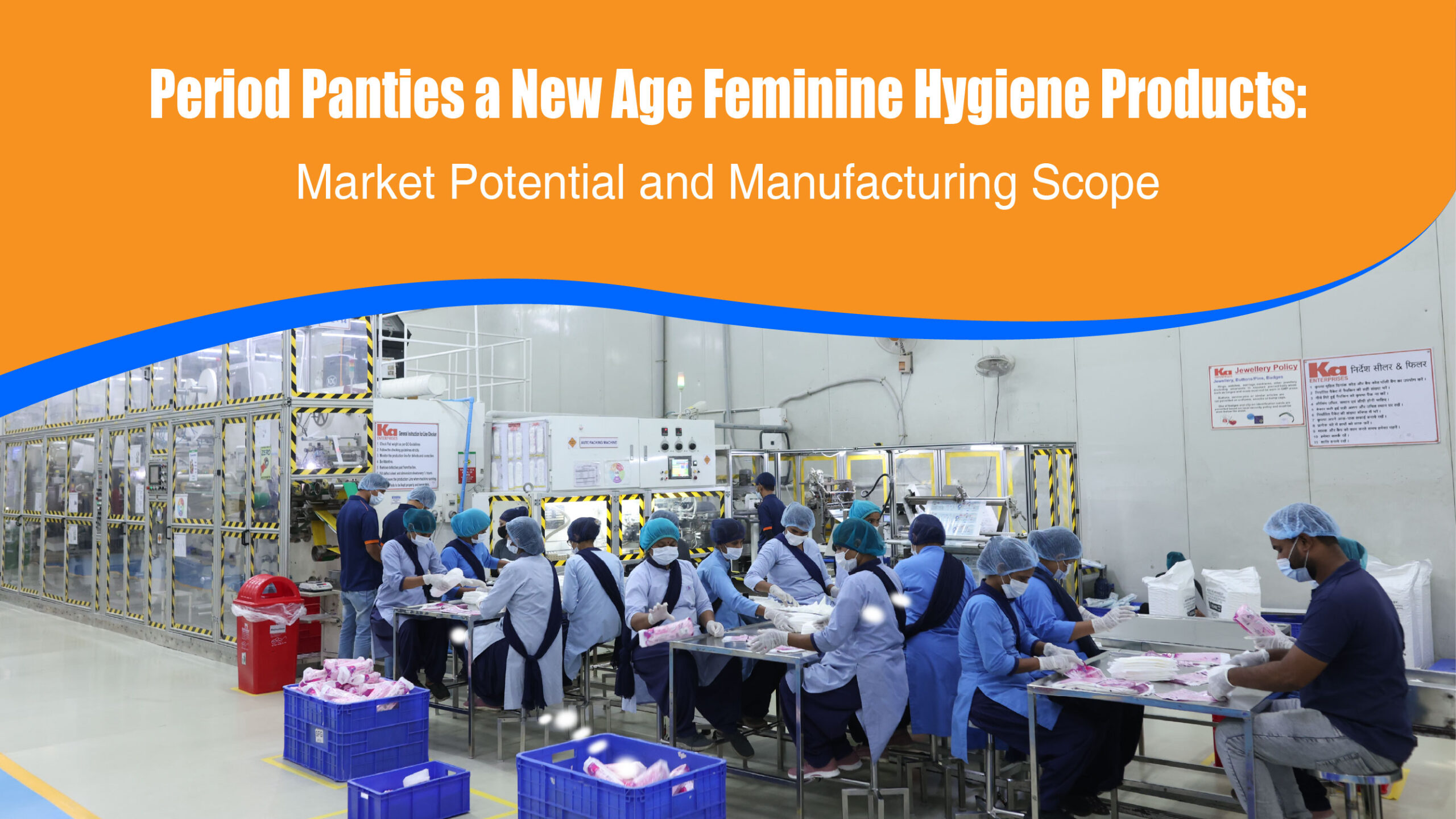
The feminine hygiene industry is no longer limited to sanitary pads and tampons. A powerful new category is emerging; disposable period panty designed specifically for menstrual use. Often referred to commercially within the period panties market, disposable period panties are reshaping how consumers manage heavy flow days, overnight protection, travel needs, and postpartum recovery.
Disposable period panty shine as a travel/commute essential. A 2025 survey showed adaptation rising to 5.7% [reportedly]1. Engineered with integrated absorbent cores, elastic waistbands, and leak-proof barriers, they make the best travel and commute companion. Combining the structure of an adult pull-up diaper with the comfort and discreetness of underwear, tailored specifically for menstruation.
As part of the broader new age feminine hygiene products segment, it represent a high-growth, high-margin innovation with strong manufacturing and private label potential.
What Are Disposable Period Panties?
It is single-use, full-coverage absorbent underwear designed to replace or supplement sanitary pads. They typically include:
- A soft non-woven top sheet
- A superabsorbent polymer (SAP) core
- Leak-guard side barriers
- Elastic waist and leg cuffs
- Breathable back sheet
They are worn like regular underwear and discarded after use.
These products are particularly popular for Heavy flow days, Night-time protection, Postpartum bleeding, Travel convenience. Unlike products in the reusable menstrual products market, It focus on convenience, hygiene, and high absorbency rather than washability.
Period Panties Market: Disposable Segment Growth
The period panties market has expanded beyond reusable formats and now includes disposable variants as a high-growth subsegment.
Globally, disposable period panty (including feminine and light incontinence variants) is experiencing steady expansion due to their Demand for leak-proof all-in-one solutions, Increased acceptance of underwear-style hygiene products, Growth in e-commerce and pharmacy retail channels, Higher comfort expectations compared to bulky pads. In emerging markets such as India, Southeast Asia, and Latin America, disposable menstrual underwear is gaining popularity among urban consumers seeking premium hygiene experiences.
Demand Drivers Behind Disposable Period Panties
1. Changing Consumer Preferences
Consumers increasingly prefer all-in-one absorbent garments over layering pads inside underwear. Disposable period panties eliminate pad shifting, adhesive failures, and leakage concerns.
This shift is part of broader feminine hygiene innovation trends transforming the industry.
2. Lifestyle Diseases and Heavy Flow Management
Conditions such as PCOS, hormonal imbalance, and stress-related menstrual irregularities contribute to heavier and unpredictable cycles. These trends increase reliance on high-absorbency products.
3. Travel and Night Protection
It offer superior overnight coverage and 360-degree protection, reducing the risk of bedding stains. This has significantly increased washable period panties demand alternatives in favor of convenient single-use solutions for specific situations.
4. Hygiene and Infection Control Awareness
In regions with limited washing infrastructure, disposable options are often considered more hygienic than reusable alternatives, particularly in humid climates.
Position Within New Age Feminine Hygiene Products
Disposable period panty sit within the category of new age feminine hygiene products, alongside:
- Organic sanitary pads
- Biodegradable napkins
- Menstrual cups
- Hybrid absorbent underwear
While sustainable menstrual products continue to grow, there is still strong demand for disposable formats, particularly in high-flow or emergency-use scenarios.
The market is not purely reusable vs disposable sanitary products instead, it is becoming a hybrid ecosystem where consumers mix formats based on convenience and flow intensity.
Manufacturing Scope: Disposable Period Underwear Production
From a production perspective, It is closer to baby diaper and adult diaper manufacturing than garment production.
Core Manufacturing Components:
- Non-woven fabric processing
- SAP (Super Absorbent Polymer) integration
- Ultrasonic bonding systems
- Elastic waist sealing
- Automated high-speed production lines
- Manufacturers with expertise in adult incontinence or baby diaper production can diversify into disposable menstrual underwear with relatively moderate line modifications.
- This creates strong opportunities in:
- Adult diaper OEM manufacturing adaptation
- Feminine-focused absorbent underwear lines
- Contract and private label manufacturing
India’s hygiene manufacturing sector is particularly well positioned due to its expanding diaper production ecosystem.
Sustainability Considerations
While disposable period panties are single use, some disposable period panties manufacturers are introducing:
- Biodegradable back sheets
- Reduced plastic content
- Plant-based absorbent cores
- This aligns partially with demand for sustainable menstrual products, though environmental impact remains a key industry challenge.
Companies investing in sustainable hygiene manufacturing technologies are likely to gain competitive advantages.
Business Opportunities for Brands
The disposable segment of the period panties market presents multiple commercial opportunities:
1. Premium Urban Targeting
Positioned as leak-proof luxury protection.
2. Teen and First-Cycle Market
Discreet and easy-to-use products appeal strongly to adolescents.
3. Postpartum and Medical Channels
Hospitals and maternity clinics represent strong B2B distribution channels.
4. Private Label Expansion
Growing demand for private label period panties in supermarkets and pharmacy chains.
5. Export Manufacturing
India and Southeast Asia offer competitive cost advantages for global supply.
Challenges in Disposable Period Panty Manufacturing
Despite strong demand, challenges include:
- High raw material cost (SAP and non-woven fabrics)
- Environmental concerns
- Consumer education on correct sizing
- Competition from established diaper brands
Disposable period panties manufacturers must ensure quality consistency, absorbency testing, and dermatological safety certification
Conclusion
The disposable segment within the period panties market represents a powerful growth frontier in feminine hygiene. Positioned within the broader ecosystem of new age feminine hygiene products, it is combine convenience, comfort, and advanced absorbency technology.
With increasing urban demand, hybrid hygiene usage patterns, and manufacturing adaptability from diaper production lines, this category offers significant commercial potential. Companies that balance performance, cost efficiency, and environmental responsibility will shape the next phase of market leadership.
FAQ
What are disposable period panties and how do they work?
They are single-use absorbent underwear designed with an integrated absorbent core and leak-proof layers to manage menstrual flow without additional pads.
Are disposable period panties safe for daily use?
Yes, when produced under hygienic manufacturing standards and dermatologically tested materials.
Why are disposable period panties gaining popularity globally?
They provide superior leak protection, convenience, and comfort, especially for heavy flow and overnight use.
How big is the period panties market compared to sanitary pads?
Sanitary pads dominate volume, but the disposable segment within the period panties market is growing rapidly in premium and urban segments.
Are disposable period panties considered eco-friendly menstrual products?
Traditional variants are not fully eco-friendly, though some manufacturers are incorporating biodegradable materials.
What materials are used in disposable period panty manufacturing?
Non-woven top sheets, superabsorbent polymers, breathable back sheets, elastics, and leak-guard barriers.
Can disposable period panty replace sanitary pads completely?
For heavy flow and overnight use, yes. However, many consumers use them selectively alongside pads.
What challenges are involved in manufacturing disposable period panty?
High raw material cost, absorbency engineering, environmental concerns, and scaling automated production lines.
Is there demand for private label disposable period panties in India and abroad?
Yes, retailers and D2C brands are increasingly launching private label variants to capture premium urban consumers.
How can brands enter the new-age feminine hygiene market?
Through OEM partnerships, differentiated absorbency technology, targeted marketing, and sustainability-focused innovation.