
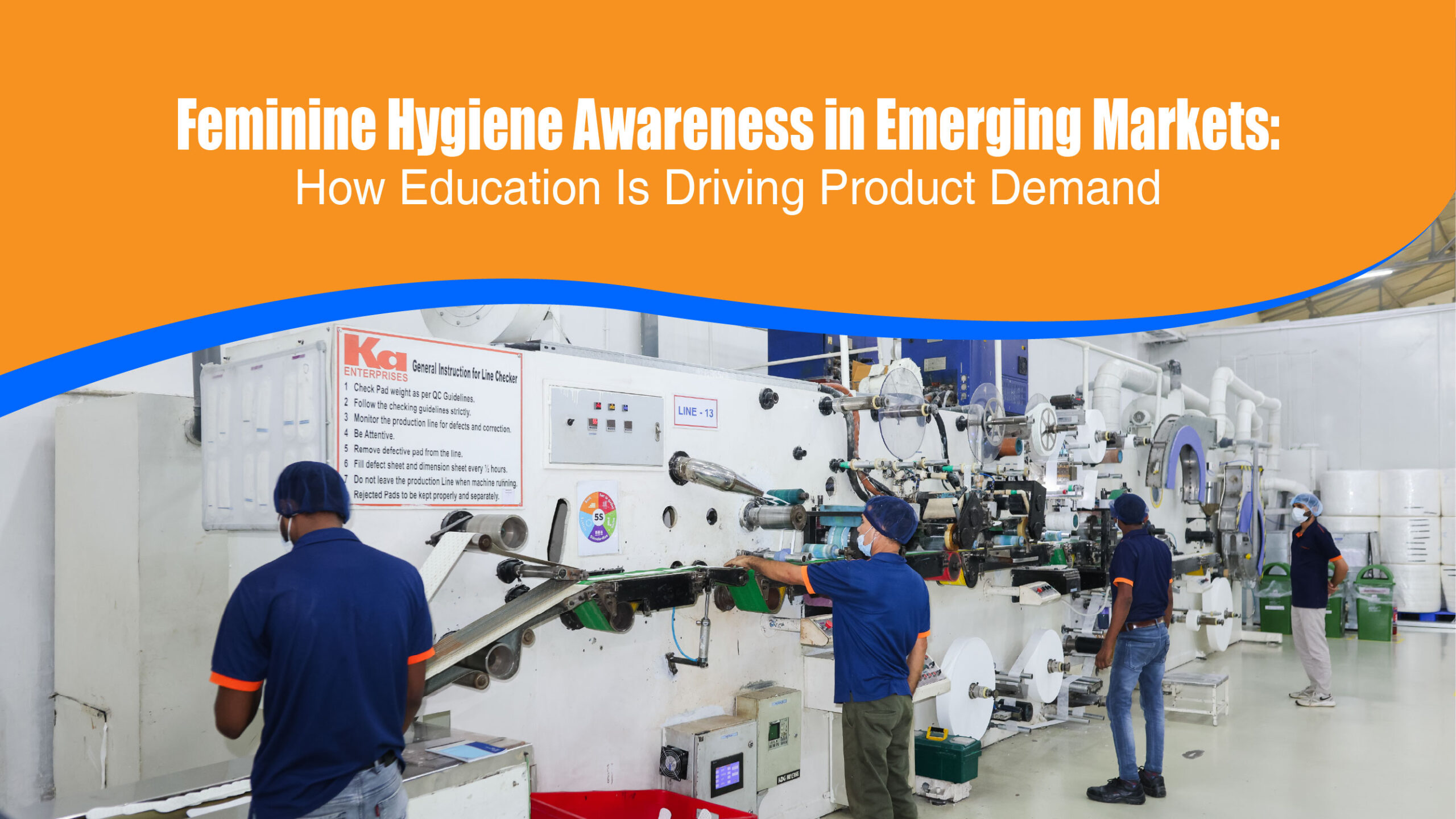
In many parts of the world, menstruation continues to be embroiled by silence, stigma, and misinformation. Yet across emerging economies, that narrative is steadily changing. Feminine hygiene awareness in emerging markets is gaining momentum as governments, non- profits, schools, and responsible brands invest in education initiatives that promote dignity, health, and access to safe hygiene products.
This rise in awareness is not only improving health and social outcomes for women and adolescent girls- it is also reshaping consumer behavior and accelerating demand for feminine hygiene products. As education spreads, markets evolve. This article explores how awareness and education act as powerful catalysts for both social progress and sustainable market growth.
Table of Contents
Understanding Feminine Hygiene Awareness in Emerging Markets
Feminine hygiene awareness refers to structured efforts aimed at educating women and girls about menstruation, menstrual health management, and the safe use of hygiene products. In many emerging markets, these efforts address deeply rooted challenges such as cultural taboos, limited product access, inadequate sanitation infrastructure, and low health literacy.
Awareness programs typically focus on:
- Normalizing conversations around menstruation
- Teaching safe and hygienic menstrual practices
- Encouraging the use of sanitary napkins and other modern hygiene products
- Supporting continued school attendance and workforce participation
- Together, these initiatives contribute to improved quality of life and long- term social development.
Why Menstrual Hygiene Awareness Matters
Menstrual hygiene awareness plays a critical role in preventing infections, improving reproductive health, and reducing school absenteeism among adolescent girls. In many regions, girls miss school during menstruation due to lack of access to products, fear of embarrassment, or insufficient facilities.
As awareness increases, the benefits are measurable:
- Improved physical and reproductive health outcomes
- Greater confidence and self- esteem
- Higher school retention and participation
- Reduced gender- based inequality
Equally important, informed consumers are more likely to adopt modern hygiene solutions- directly influencing purchasing patterns and long- term demand.
The Role of Education in Feminine Hygiene
Education is at the core of sustainable change. The role of education in feminine hygiene goes beyond information- it equips girls with confidence, challenges misconceptions, and fosters healthier practices.
How Education Creates Change
- School- based programs introduce menstrual health before menarche
- Community sessions involve mothers and caregivers, extending impact beyond classrooms
- Health educators provide guidance on product use, disposal, and hygiene
By integrating menstrual health into everyday learning, communities gradually shift away from unsafe traditional practices toward reliable, hygienic alternatives.
How Awareness Translates Into Product Demand
One of the most visible outcomes of education- driven awareness is rising feminine hygiene product demand. When women understand the health implications of unhygienic practices, they are more willing to try and consistently use sanitary napkins, tampons, or reusable options.
Education- led awareness results in:
- Growth in first- time users
- Increased trust and brand loyalty
- Willingness to invest in comfort and quality
- Expansion of demand in rural and semi- urban regions
This demand encourages manufacturers to develop affordable, locally produced solutions tailored to regional needs.
The Role of NGOs in Advancing Menstrual Hygiene Awareness
Non-governmental organizations play a vital role in reaching underserved populations- often where commercial access is limited. NGOs act as bridges between education, access, and adoption.
Common NGO- Led Initiatives
- Free or subsidized distribution of sanitary napkins
- Menstrual health education workshops
- Training local women as health ambassadors
- Partnerships with schools and healthcare centers
These initiatives build long-term awareness and gradually integrate hygiene products into daily life, laying out the foundation for sustained market growth.
How Awareness Programs Increase Sanitary Napkin Usage
Targeted awareness programs have a direct impact on adoption rates. When education is combined with product access, usage increases significantly.
Effective programs:
- Demonstrate correct usage and disposal
- Address cultural resistance with factual guidance
- Build trust in product safety and effectiveness
- Encourage peer- to- peer learning and normalization
Over time, these efforts reduce reliance on unsafe alternatives and help establish sanitary napkins as a standard hygiene choice.
Why Brands Are Investing in Hygiene Awareness
For many brands, hygiene education has evolved from a social initiative into a strategic investment. Supporting feminine hygiene awareness in emerging markets helps brands establish credibility while responsibly expanding their customer base.
Benefits for Brands Include:
- Stronger consumer trust and long- term loyalty
- Deeper penetration into rural and emerging markets
- Alignment with ESG and CSR commitments
- Sustainable, demand- led market growth
Brands that collaborate with NGOs, schools, or public health programs often see higher adoption rates and positive brand perception over time.
Conclusion: Awareness as a Catalyst for Progress
Feminine hygiene awareness in emerging markets is far more than a public health effort- it is a driver of social inclusion, educational continuity, and economic opportunity. Education empowers women, dismantles long- standing taboos, and directly influences the adoption of safe hygiene products.
As awareness continues to expand through education systems, NGO initiatives, and brand- led programs, demand for feminine hygiene products will grow steadily. Investing in awareness today not only improves lives- it helps build a more informed, equitable, and sustainable market for the future.
How does menstrual hygiene awareness increase product demand
By educating women about health risks and benefits, awareness programs encourage the adoption of modern hygiene products.
Why is feminine hygiene education especially important in emerging markets?
It helps break taboos, improves health outcomes, reduces school absenteeism, and empowers women with knowledge.
How do awareness programs increase sanitary napkin usage?
They combine education with access, address misconceptions, and normalize usage through community engagement.
What role does education play in menstrual hygiene?
Education provides accurate information, promotes safe practices, and builds confidence among girls and women.
How do NGOs contribute to menstrual hygiene awareness?
Through workshops, product distribution, community training, and school- based initiatives.
How do brands benefit from supporting hygiene awareness?
They gain trust, expand responsibly into new markets, and support sustainable demand growth.